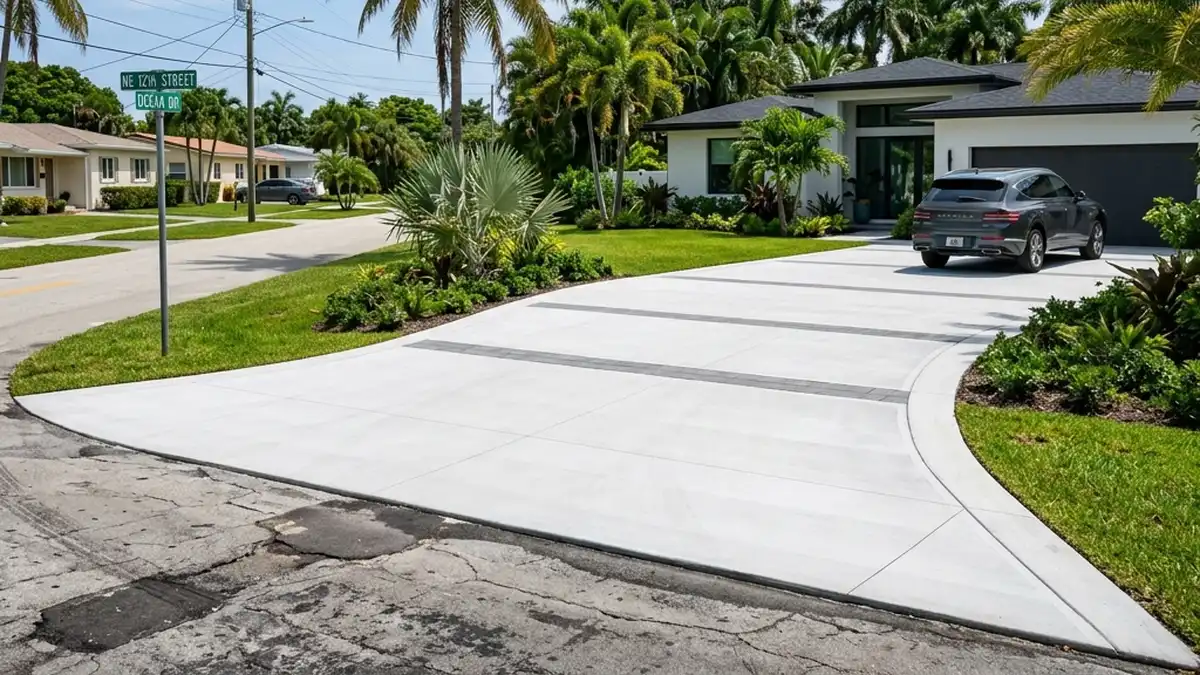
If you're a homeowner in Broward County, you already know that our South Florida climate is brutal on exterior surfaces. The relentless sun, torrential summer downpours, high humidity, and the occasional hurricane can quickly turn a poorly paved driveway into a cracked, crumbling eyesore. When it comes time to upgrade your home’s exterior, the debate inevitably boils down to two heavyweights: concrete versus asphalt.
As experienced concrete contractors in Davie FL, we've torn up our fair share of melted asphalt and cracked slabs. We've seen exactly how different materials age over a span of 10 to 20 years in this specific environment. Let's dive deep into the technical and practical reasons why concrete driveways are the undisputed champion for Florida homes, covering everything from PSI strength and the curing process to heat reflection and long-term maintenance costs.
1. Heat Deflection and Surface Temperatures
Let's talk about the summer sun. Asphalt is essentially composed of rock aggregates bound together by a viscous petroleum-based asphalt cement. Because of its dark color and chemical makeup, asphalt absorbs a massive amount of solar radiation. On a typical 90-degree July day in Davie, an asphalt driveway can easily reach surface temperatures exceeding 140 degrees Fahrenheit.
This isn't just uncomfortable to walk on barefoot; it fundamentally alters the material. Extreme heat softens the tar-like binders in asphalt, making the surface pliable. Have you ever noticed tire marks, kickstand indentations, or heavy vehicle depressions on an asphalt driveway during the summer? That's the structural integrity of the pavement failing under thermal stress.
Concrete, on the other hand, is a highly reflective material. A standard light-colored concrete mix reflects a significant portion of UV rays, keeping the surface temperature drastically cooler. When our Davie concrete teams pour a fresh driveway, we're laying down a rigid, crystalline structure that remains solid regardless of ambient temperatures. You won't have to worry about your car tires sinking into the pavement in August.
2. Unmatched Durability and Compressive Strength
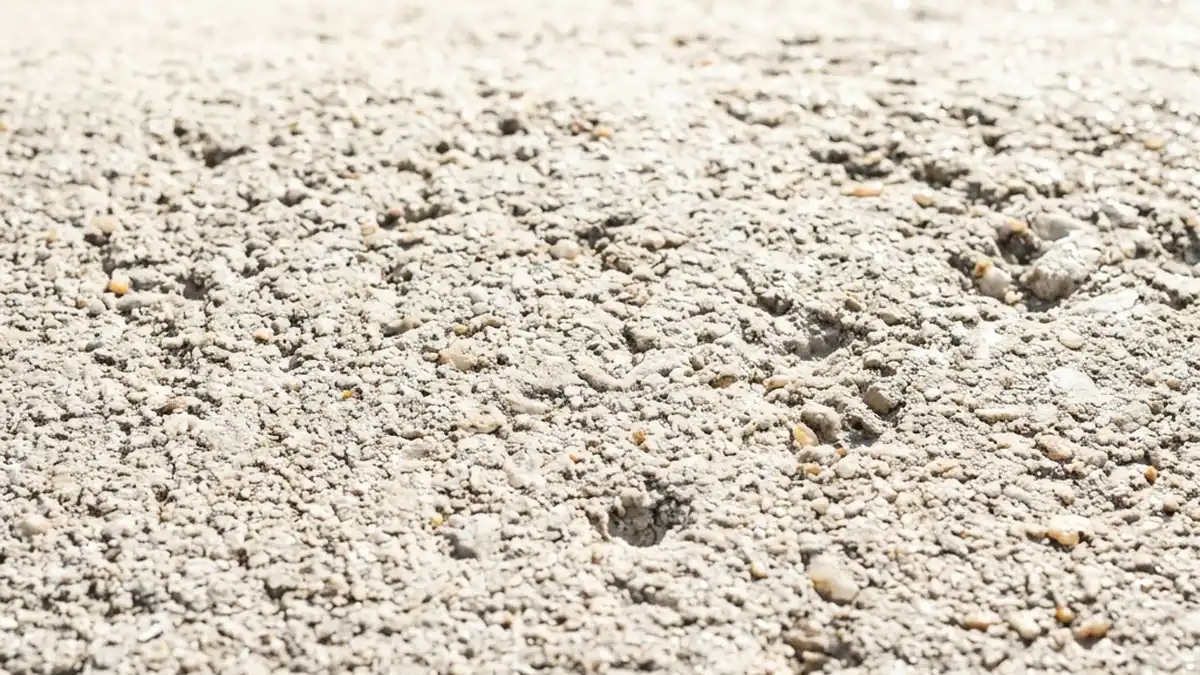
When evaluating paving materials, engineers look at compressive strength, usually measured in PSI (pounds per square inch). A standard residential concrete driveway is typically poured with a mix rated between 3,000 and 4,000 PSI. This means every square inch of your driveway can support up to 4,000 pounds of pressure before structural failure occurs.
Asphalt is a flexible pavement, which has its uses on high-speed highways where slight flexing under semi-truck tires is beneficial. But for a residential driveway, you want rigidity. The heavy, localized weight of parked SUVs, boats, or RVs will eventually cause flexible asphalt to rut and dip, especially when the subgrade softens during Florida’s rainy season.
Furthermore, the durability of concrete is heavily dependent on proper installation. At Davie Concrete, we prioritize meticulous subgrade preparation. A driveway is only as strong as the earth beneath it. We compact the soil, lay a proper aggregate base, and utilize steel rebar or wire mesh reinforcement to provide tensile strength, preventing the slab from shifting or cracking under load.
3. The Lifespan and Long-Term ROI
Cost is always a primary factor for homeowners. It’s no secret that the initial installation cost of a concrete driveway is higher than asphalt. However, focusing solely on the upfront cost is a trap that often leads to higher long-term expenses.
- Asphalt Lifespan: Typically 12 to 20 years. Requires sealcoating every 2 to 3 years to prevent the petroleum binders from oxidizing and turning brittle.
- Concrete Lifespan: Easily 30 to 50+ years when properly installed and cured. Maintenance is minimal.
Let's look at the maintenance reality. To keep an asphalt driveway from unraveling, you must consistently sealcoat it. This means clearing off your driveway, paying a contractor to spray a smelly chemical sealant, and keeping vehicles off it for days. If you skip this maintenance, the asphalt will oxidize, turn gray, and begin to crumble into loose gravel.
A concrete driveway installed by professional concrete contractors requires a fraction of that maintenance. We recommend applying a high-quality penetrating silane-siloxane sealer immediately after the curing process is complete (usually around 28 days post-pour). After that, a simple pressure washing once a year is usually all it takes to keep it looking pristine. Over a 20-year period, the maintenance costs of asphalt far exceed the slightly higher initial investment of concrete.
4. Aesthetic Versatility and Curb Appeal
Asphalt offers one look: flat, black pavement that slowly fades to a dull gray over time. If you want to elevate the curb appeal of your South Florida home, asphalt severely limits your design options.
Concrete is incredibly versatile. We aren't just pouring gray slabs anymore. Modern concrete can be stamped, colored, stained, and textured to mimic high-end materials like natural stone, brick, slate, or even wood. A beautifully stamped concrete border or a fully decorative concrete driveway instantly increases property value and creates a stunning entrance to your home.
5. Handling South Florida's Heavy Rains
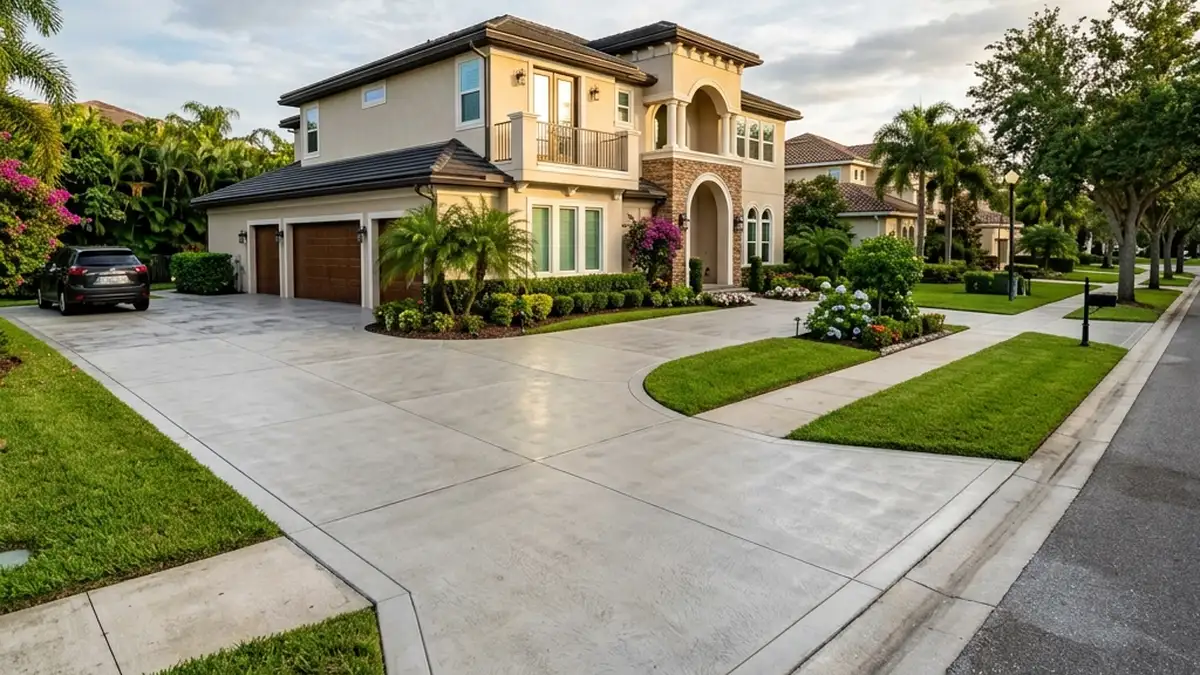
Water management is a massive concern in our region. When heavy afternoon thunderstorms hit, your driveway needs to efficiently shed water away from your home’s foundation. Because asphalt is flexible and prone to rutting, it frequently develops "birdbaths"—low spots where water pools and sits.
Standing water is the enemy of any pavement. On asphalt, it accelerates the breakdown of the binders. On a properly graded, rigid concrete driveway, water flows predictably into the designated drainage swales or street gutters. Furthermore, concrete edges don't break off and crumble into your lawn the way the thin edges of an asphalt driveway often do when exposed to heavy runoff.
Conclusion: Making the Right Choice for Your Home
While asphalt might seem like a budget-friendly quick fix, the environmental realities of South Florida quickly expose its weaknesses. The intense heat, heavy rains, and constant UV exposure break down asphalt at an accelerated rate, leaving homeowners with a cycle of constant sealing, patching, and eventual replacement.
Investing in a high-quality concrete driveway is the smarter financial and structural decision. With superior PSI strength, cooler surface temperatures, virtually limitless aesthetic options, and a lifespan that can exceed 40 years, concrete is simply built differently.
If you're ready to upgrade your property with a pavement designed to last a lifetime, we are here to help. As the leading experts in paving, leveling, and decorative concrete, our team ensures every pour is executed flawlessly from subgrade prep to the final curing stages.